Vicente Bautista
World War II veteran, Hukbalahap Guerilla Forces
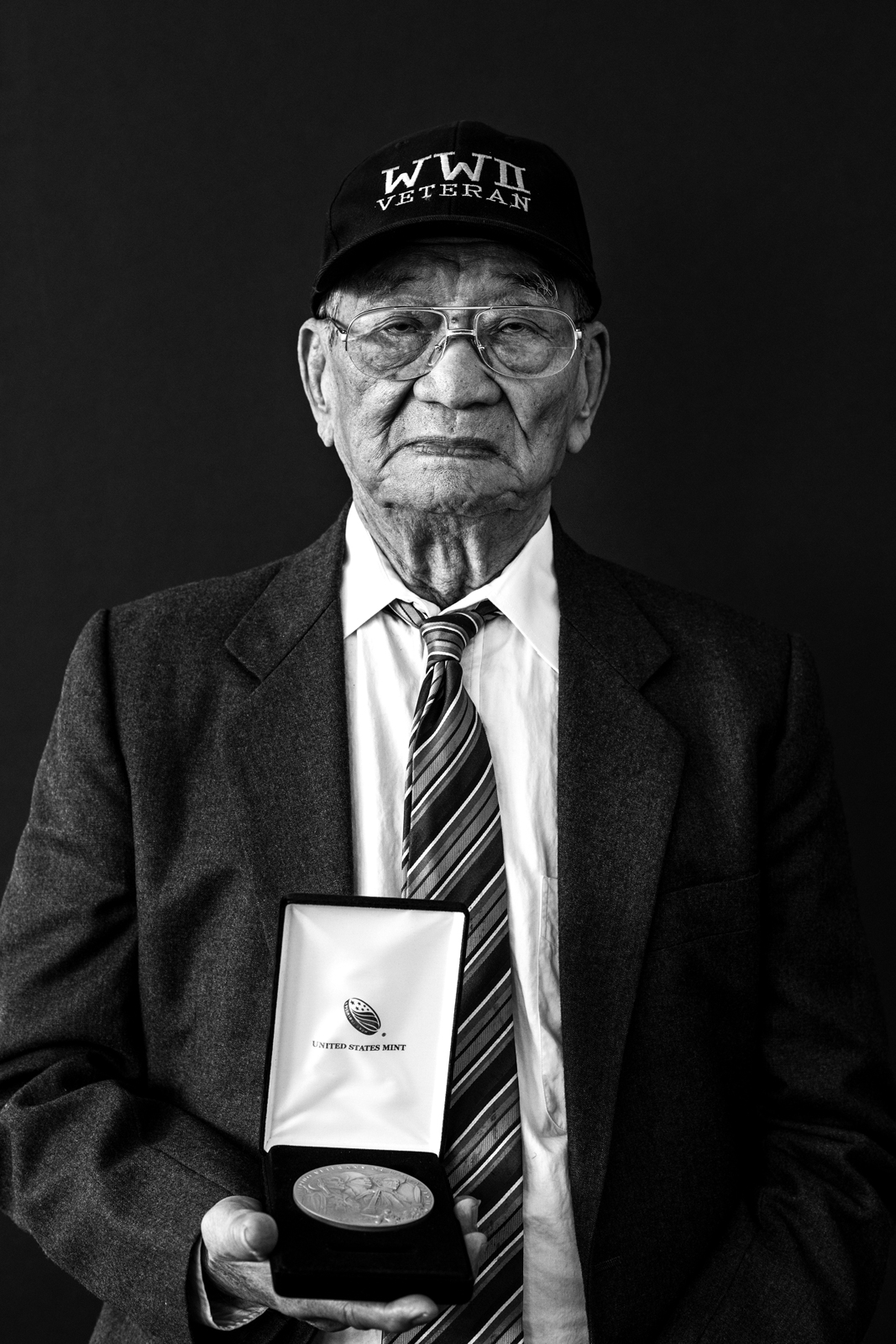
Photographed in San Francisco, California, 2018
The "Hukbong Bayan Laban sa mga Hapon", which means "People's Army Against the Japanese," were known as the Hukbalahap. During the war, they kept vast regions of the Philippines’ most productive agricultural lands out of Japanese hands and, in the process, initiated land reform and established local governance in haciendas abandoned by the landed elite.
During the Japanese occupation of the Philippines, the Hukbalahap created a resistance army consisting largely of peasant farmers against the Japanese forces in Central Luzon. The Huk Resistance, as it became popularly known, created a stronghold against the Japanese in the villages through guerrilla warfare. During this time, the area was heavily protected by Huks, and Huk justice reigned.
The Huk Movement was notable for its inclusion of women peasants, who advocated for inclusion in the movement in resistance to word of Japanese war atrocities against women, including rape and mutilation. Many of these women fought, but the majority of the resistance remained in villages collecting supplies and intelligence. Women in the forest camps were discouraged from entering combat, but often trained in first aid, communication/propaganda, and recruitment tactics
The aftermath of the liberation from Japan was characterized by chaos. The Philippine Government, prompted by the United States of America, disarmed and arrested the Huks for allegedly being communists. Harassment and abuses against peasant activists became common as United States Army Forces in the Far East (USAFFE) and the Philippine Constabulary (civilian police) hunted them. Civilian casualties were substantial and the Huks decided to retreat into the mountains and to their guerrilla lifestyle. In 1954, Huk leader Luis Taruc surrendered, effectively ending the Hukbalahap Rebellion.